
Knoxville residential HVAC design with home-performance expertise
HVAC 2 Home Performance® provides independent residential HVAC design, building-performance diagnostics, testing, commissioning, and verification in Knoxville, Tennessee. Knoxville homes need one design that works through humid cooling weather and real winter heating conditions, with room-by-room loads, ducts, airflow, attics, crawlspaces, and the building enclosure evaluated together.
Is your HVAC system solving the problem—or just responding to the house?
Many Knoxville comfort problems begin with the interaction between the building and the HVAC system. Air leakage, crawlspace and attic conditions, insulation, solar gain, duct losses, pressure relationships, and room-by-room loads can produce different symptoms in heating and cooling seasons.
We start with the house, the symptoms, and the decision ahead. Homeowners, engineers, architects, builders, and contractors can use that evidence to choose the right design, diagnostic, testing, commissioning, or Verified™ pathway.
 Knoxville & East Tennessee
Local access to a higher-level, in-person consultation when the project benefits from it.
Knoxville & East Tennessee
Local access to a higher-level, in-person consultation when the project benefits from it.
HVAC comfort and humidity problems Knoxville homeowners experience
A new unit does not automatically correct a load, airflow, duct, or enclosure problem. For example, the following symptoms often deserve a whole-home review:
- Hot and cold rooms or an uncomfortable upstairs
- High indoor humidity and short cycling
- Heat pumps that do not perform as expected
- Oversized equipment or weak dehumidification
- Uneven airflow and room pressure problems
- Duct leakage, restrictions, or poor layout
- Ducts in vented attics or crawlspaces
- Crawlspace moisture and outdoor-air infiltration
- Building air leakage and insulation deficiencies
- Thermal-boundary gaps and attic bypasses
- High energy use without stable comfort
- Problems after additions or renovations
Residential HVAC system design in Knoxville
Professional residential HVAC design connects the home’s actual heating and cooling loads to equipment selection, airflow, duct design, ventilation, and installation intent. For that reason, a load calculation is not merely a document used to select a nominal equipment size; it helps explain how the building creates the load and what the HVAC system must accomplish.
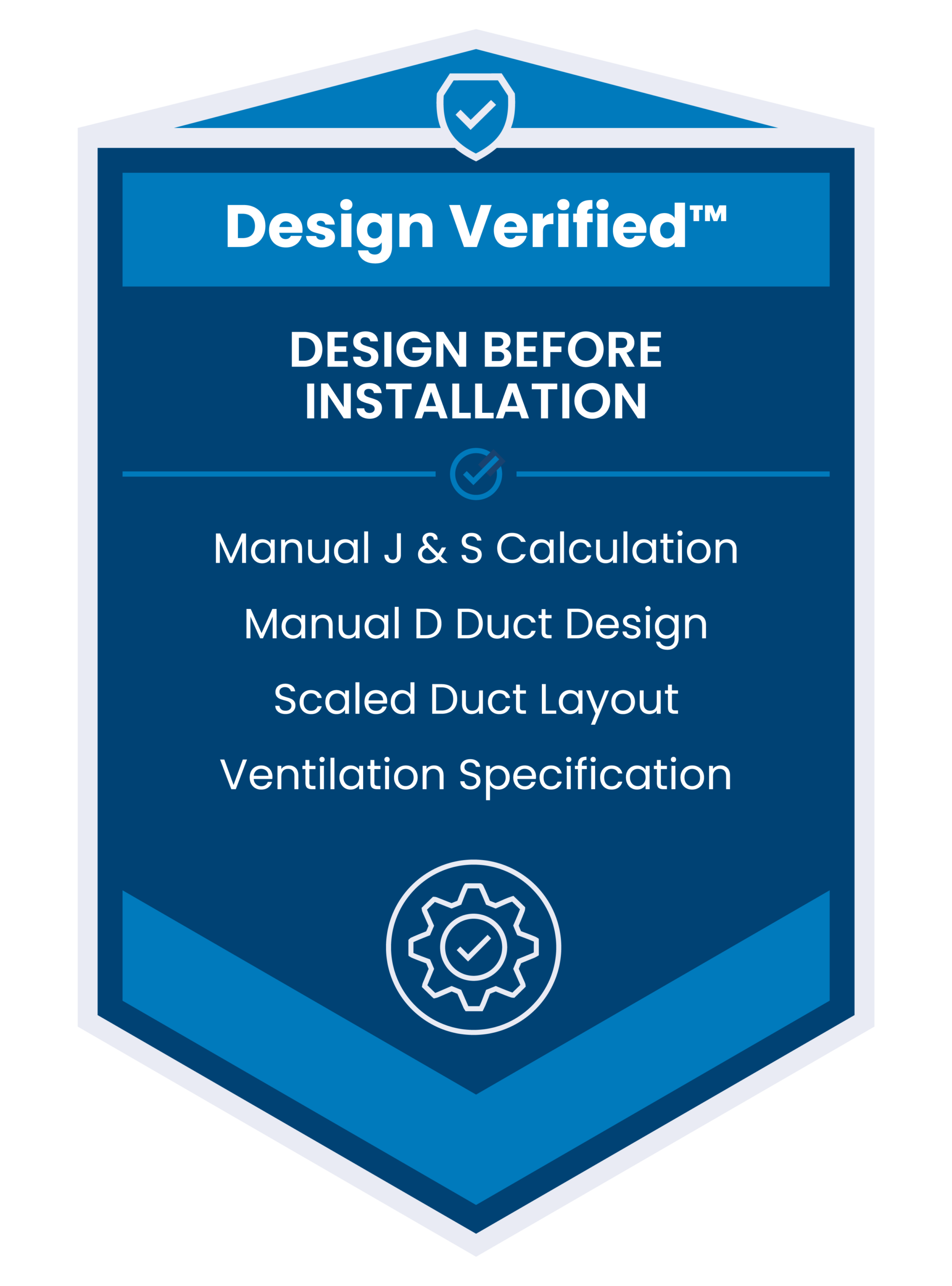
Design Verified™ is HVAC 2 Home Performance’s residential HVAC system design methodology for connecting load calculations, equipment selection, duct design, airflow, ventilation, and design intent.
- Manual J room-by-room and existing-building load calculations
- Manual S equipment selection using heat-pump performance data
- Manual D duct design and scaled layouts
- Room-by-room airflow and pressure requirements
- Ventilation and indoor-air-quality planning
- Diagnostics, testing, and commissioning when applicable
Our methods align with recognized ACCA technical manuals. Explore our residential design services and Manual J service.
Home performance and permanent load reduction
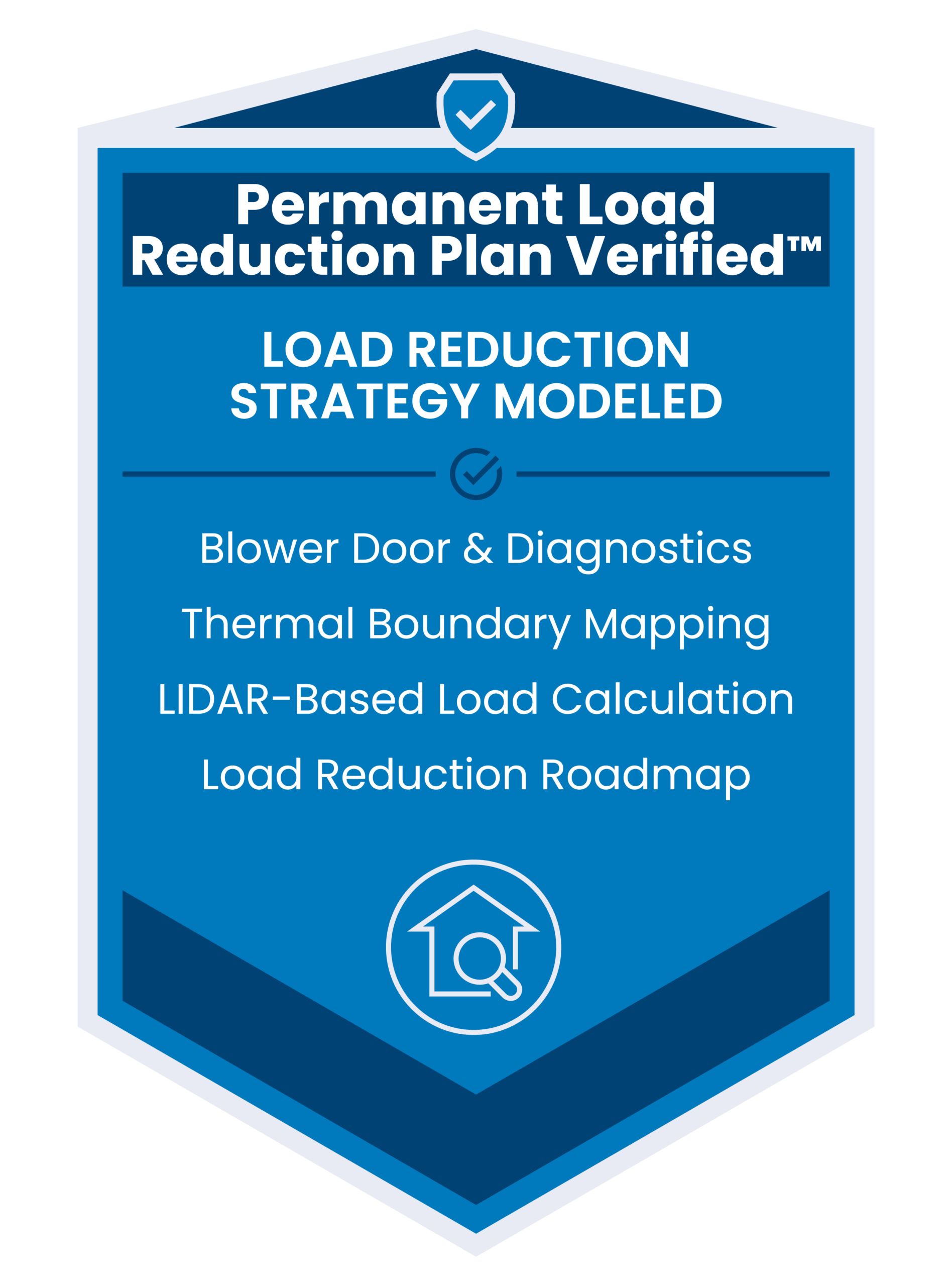
Before replacing the HVAC system, can the project permanently reduce how much heating and cooling the house needs? Permanent Load Reduction Plan Verified™ measures and models an existing building to identify load-reduction opportunities before major HVAC decisions are finalized.
First, the evaluation may consider blower-door testing, existing-building loads, crawlspace and attic conditions, infiltration, insulation, duct performance, humidity, and improvement modeling. Next, the process can prioritize air sealing, envelope, insulation, or duct improvements and recalculate the load after the proposed scope is defined.
Consequently, the goal is not a generic list of upgrades. Instead, the goal is to determine how building improvements could permanently change the HVAC load and therefore change the equipment, duct, or comfort decision. Finally, we define the plan and verification pathway; construction responsibility depends on the selected project scope and qualified trade partners.
Our home market. A more hands-on option.
Specifically, Knoxville is home for HVAC 2 Home Performance. When a project calls for it, we can go beyond a remote design conversation and provide a high-level, in-person consultation that considers the home, HVAC system, comfort concerns, and building-performance questions together.
Understand the concerns
Discuss rooms, seasons, humidity, prior work, homeowner priorities, and the decision that needs to be made.
Review connected systems
When appropriate, consider equipment, ducts, crawlspace or attic observations, thermal boundaries, and moisture relationships.
Define the next step
Determine whether the project needs design, measurement, modeling, testing, or coordination with a qualified contractor.
Why the house and HVAC system are connected in East Tennessee
Knoxville has meaningful heating and cooling requirements. During humid weather, infiltration, crawlspaces, attic conditions, duct leakage, insulation gaps, windows, and solar gain can add sensible and latent loads. Meanwhile, during colder weather, envelope losses and equipment performance at design conditions also matter.
As a result, improving HVAC performance may require changing the building, the ducts, the controls, the equipment selection—or a coordinated combination.
Successful heat-pump design depends on more than efficiency ratings
Heat-pump sizing in Knoxville should use accurate loads, design conditions, Manual S selection, manufacturer performance data, airflow, duct design, envelope performance, installation quality, and commissioning. For example, oversized equipment can create comfort, cycling, and humidity problems.
Moreover, permanent load reduction can sometimes lower the required capacity before equipment is selected. Together, Design Verified™ and Permanent Load Reduction Plan Verified™ can inform the same decision from two different starting points.
The house already exists. We can measure it.
As a result, existing homes provide an opportunity to replace assumptions with field information. For instance, depending on scope, useful inputs may include blower-door testing, building dimensions, existing equipment information, airflow, static pressure, temperature, humidity, duct observations, and building-envelope observations.
Measurements are selected to answer the project’s questions; every measurement is not included in every service.
Two related pathways—not one artificial sequence
Verified™ connects design intent to accountable work and measured outcomes. Accordingly, the correct pathway depends on where the project begins.
HVAC design, installation, and performance
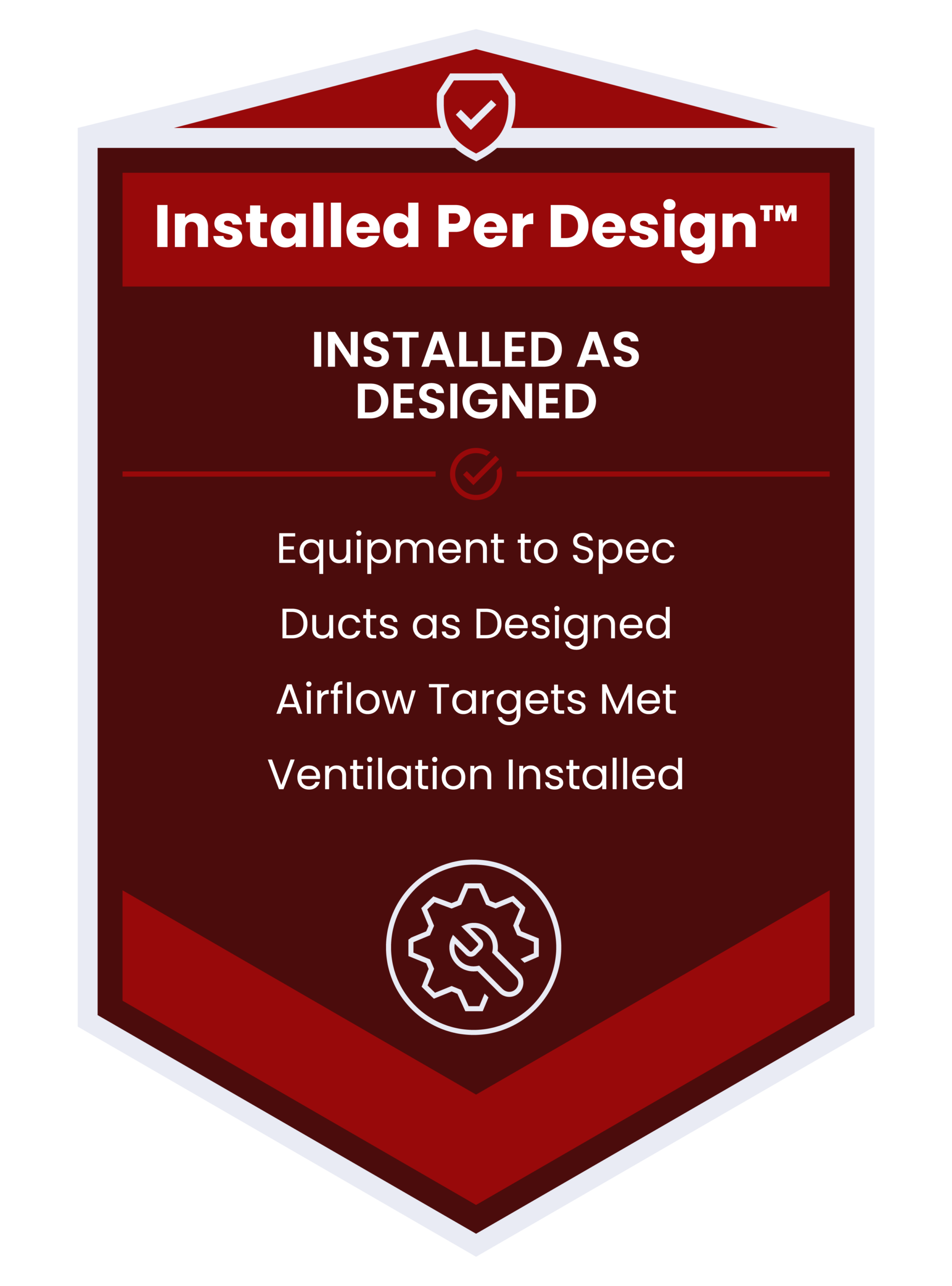
First, Design Verified™ establishes what the system should be. Next, Installed Per Design™ checks critical installation elements. Finally, Performance Verified™ tests, commissions, and benchmarks actual performance.
Existing home and permanent load reduction
First, Permanent Load Reduction Plan Verified™ identifies modeled opportunities. Then, improvements follow the defined scope. Finally, Permanent Load Reduction Verified™ confirms and benchmarks the results afterward.
Knoxville, East Tennessee, and surrounding communities
HVAC 2 Home Performance supports design and consulting projects nationally. However, Knoxville receives additional attention because it is our home market and can allow a higher-level, in-person consultation when appropriate. Ultimately, project scope and availability—not a city list—determine whether work can be supported.
These nearby communities provide geographic context; project scope and availability determine whether remote design, an in-person consultation, or partner-supported field work is appropriate. View all HVAC 2 Home Performance® service areas.
Knoxville residential HVAC and home-performance FAQs
What is residential HVAC design?
Residential HVAC design connects room-by-room loads, equipment performance, airflow, duct layouts, ventilation, and design intent so the system is selected and documented for the actual house.
Do you provide Manual J load calculations in Knoxville?
Yes. Manual J and existing-building load calculations can be part of Knoxville residential design work. The appropriate scope depends on whether the project involves new construction, replacement equipment, renovation, diagnostics, or permanent load reduction.
Can HVAC 2 Home Performance visit my Knoxville home?
Because Knoxville is our home market, a higher-level in-person consultation may be available when the project benefits from it. However, a site visit or testing is not included automatically; the selected scope determines what is appropriate.
Should I improve the house before selecting a heat pump?
If air sealing, insulation, crawlspace, attic, duct, or envelope work could permanently reduce the load, modeling those improvements before final equipment selection may change the capacity and design decision.
Do you install every recommended improvement?
No blanket installation claim is made. Instead, HVAC 2 Home Performance can define design, measurement, modeling, and verification requirements; construction responsibility depends on the project and qualified trade partners.
HVAC & Home Performance Resources for Knoxville Homeowners and Building Professionals
These locally focused articles are being developed for the main Learning Corner. Links will be added here after publication.
Why Knoxville Homes Need an HVAC Design That Works in Two Different Seasons
How room-by-room heating and cooling loads, equipment performance, airflow, and enclosure conditions must work across Knoxville’s mixed-humid year.
Article in developmentHot Upstairs, Cold Downstairs: What Knoxville’s Hills, Attics and Duct Systems Can Tell Us About Comfort Problems
A building-science guide to multi-level temperature differences, attic and duct conditions, airflow, pressure, and room-by-room load mismatches.
Article in developmentInterested in becoming a local Verified™ contractor?
If you’d like to learn more about being a Verified™ contractor in your area, click below. On the contact form, choose “Verified™ Contractor Training” as your project type.
Learn about Verified™ contractor trainingTell us your role, location, building, and goals.
To begin, our conversational project assistant can guide homeowners, builders, contractors, engineers, and architects through a logical intake pathway and help identify the right HVAC design, home-performance, or Verified™ next step.


